
The evidence for prehabilitation is not in question. What has always been in question is whether it can be delivered consistently, safely and cost-effectively to every patient who needs it, not just those treated in specialist centres with dedicated programmes. That is the problem Clovo was built to solve, and this post explains how we approach it.
The Delivery Gap Is the Real Problem
Clinical teams working in perioperative care have understood the value of prehabilitation for years. The research is clear and has been building steadily since the early 2000s. According to a systematic review published in the British Journal of Anaesthesia, structured prehabilitation can reduce postoperative complications by up to 50% in certain surgical populations. Shorter length of stay, faster functional recovery and reduced hospital readmission rates are consistently reported across the literature.
And yet the vast majority of surgical patients receive nothing. The barrier is not scepticism. It is capacity. Delivering multimodal prehabilitation in the traditional sense requires physiotherapists, dietitians and psychologists working in a coordinated way across a patient’s pre-operative window. In most NHS trusts, that level of resource simply does not exist at the scale surgery demands. The result is a system where prehabilitation is acknowledged as best practice but routinely unavailable to the patients who would benefit most. You can read more about this in our post on why 90% of surgical patients miss out on prehabilitation.
This is not a marginal problem. According to NHS England, over 4.5 million patients are currently on elective surgical waiting lists. Each one of those patients has a pre-operative window. Most of them are not using it. The cumulative cost of that missed opportunity, in complications, extended stays and slower recoveries, is substantial. Closing that gap requires a fundamentally different delivery model, not incremental improvements to the existing one.

Why Traditional Models Cannot Scale
The traditional prehabilitation model is built around direct clinical contact. A patient is referred, assessed, assigned to a programme and supported through it by one or more clinicians. That model works well for the patients it reaches. The problem is the ratio. One physiotherapist can support a finite number of patients. One dietitian can conduct a finite number of consultations. When surgical volumes run into the hundreds of thousands annually, that model hits a ceiling very quickly.
Geographic inequality compounds the problem further. Patients treated in large teaching hospitals in major cities may have access to a dedicated prehabilitation service. Patients treated in smaller district general hospitals, or in rural areas, often do not. The result is that access to prehabilitation correlates more closely with where a patient happens to live than with whether they would clinically benefit. That is not an acceptable basis for delivering evidence-based care.
There is also the question of adherence. Even where prehabilitation programmes exist, maintaining patient engagement across a pre-operative window of several weeks is a recognised challenge. Patients who complete only part of a programme achieve only part of the benefit. A scalable model needs to address not just access but sustained engagement, and that requires a different kind of support infrastructure than weekly clinic appointments can provide.
How Clovo Approaches Population-Level Delivery
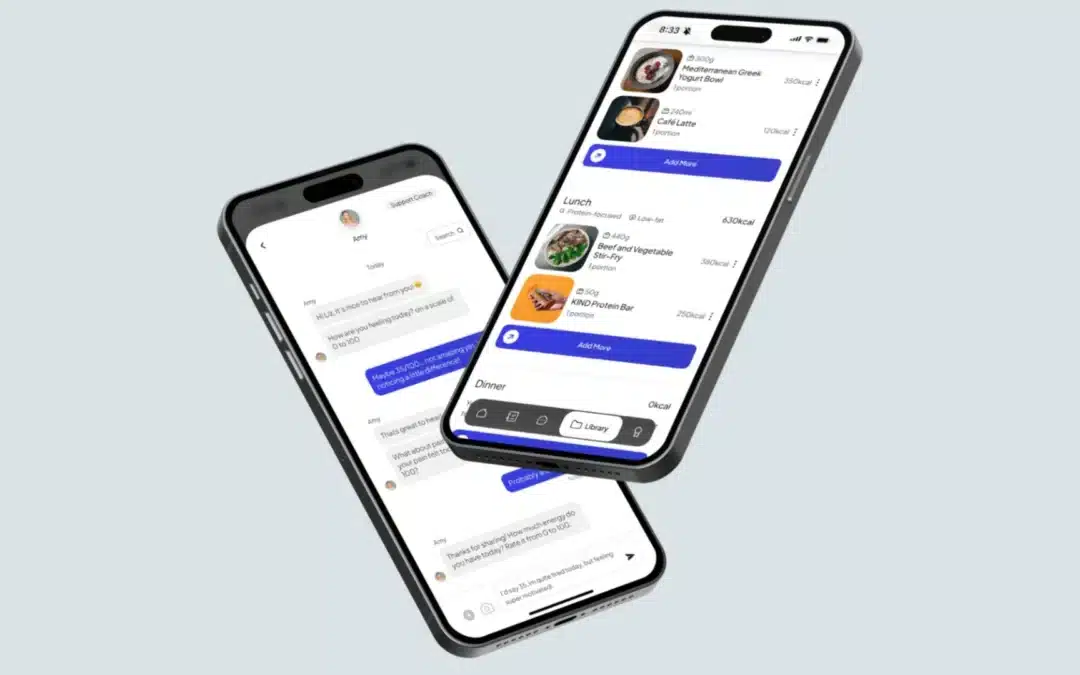
Clovo’s platform is designed to sit alongside the existing surgical pathway, not to replace the clinical teams within it. Our AI coach, Amy, delivers personalised prehabilitation programmes across movement, nutrition, mindset and recovery, adapting each patient’s plan in real time based on their progress, their procedure and their individual circumstances. Crucially, Amy can do this for hundreds of patients simultaneously, without a clinician needing to be present for every interaction.
This is not about removing clinical judgment from the process. Every protocol underpinning Amy’s recommendations has been developed with clinical input by our Chief Medical Officer, Dr Rebecca Hughes MRCS, and sits within a formal clinical governance framework. What Clovo does is extend the reach of that clinical judgment, making it available to patients who would otherwise receive no structured support at all. Clinical teams retain oversight, with Amy flagging concerns and escalating where appropriate, while the broader patient population receives consistent, evidence-based care throughout their pre-operative window.
“The question is not whether prehabilitation works at scale. The question is whether health systems can afford not to deliver it at scale.”
What Scalable Prehabilitation Means for Health System Buyers
For NHS trusts, integrated care systems and insurers evaluating value-based care solutions, the scalability question is inseparable from the economic one. A prehabilitation programme that improves outcomes for 200 patients a year is valuable. One that improves outcomes for 2,000 patients a year, at a fraction of the per-patient cost, is transformative.
The health economics of prehabilitation are well established at the individual level. Reduced complications mean shorter stays. Shorter stays mean lower bed costs. Faster recovery means earlier return to function and reduced demand on community services. When those benefits are multiplied across an entire patient population, the case for investment becomes straightforward. For procurement teams and clinical leads who want to understand how Clovo measures and reports on those outcomes, see how Clovo measures patient outcomes.
Risk stratification is also central to how Clovo operates at scale. Not every patient carries the same level of surgical risk. Patients with higher levels of frailty, significant comorbidities or reduced physiological reserve stand to gain the most from structured preparation, and also require the most careful programme design. Clovo’s platform is built to identify those patients, adjust their programmes accordingly and ensure that clinical teams are alerted where direct intervention is warranted. Scaling prehabilitation does not mean applying the same programme to everyone. It means applying the right programme to each person, efficiently and safely.
| Outcome | Effect (prehabilitation vs standard care) | Estimated impact per 1,000 patients | Source |
| Postoperative complications | Up to 44% reduction in severe complications | Up to 440 fewer severe complication events | Pinto et al., Clinical Nutrition, 2024 — frail and high-risk patients undergoing major abdominal surgery |
| Hospital length of stay | Reduction of 1.07–2.47 days per patient | 1,070–2,470 fewer bed days across the cohort | Pinto et al., Clinical Nutrition, 2024; Liao et al., JAGS, 2025 — colorectal cancer surgery |
| Cost savings (hospital stay) | Up to £2,673 saved per patient during hospital admission | Up to £2.67 million saved per 1,000 patients | Gintz et al., Frontiers in Medicine, 2023 — systematic review of economic evidence (Leeds et al. dataset) |
| Annual institutional savings | EUR 593,453 saved annually at one tertiary hospital (211 patients) | ~EUR 2.8 million extrapolated per 1,000 patients per year | Mudarra-García et al., Journal of Clinical Medicine, 2025 — centralised prehabilitation model, major surgery |
How Clovo Can Help
Clovo exists to make prehabilitation available to every surgical patient, regardless of which hospital they attend, where they live or how much capacity their clinical team has. Under the leadership of Rory Skinner and the founding team, we have built a platform that can operate at the scale the problem demands, without compromising on clinical quality or patient safety. For health system buyers, that means a solution that is deployable across entire patient populations, measurable in its outcomes and designed to integrate with existing NHS infrastructure rather than sit outside it.
If you are a clinical lead, procurement team or research partner asking whether prehabilitation can realistically be delivered at scale, the answer is yes. To understand the clinical evidence underpinning that claim, start with the evidence behind prehabilitation.
The delivery gap in prehabilitation is not a clinical problem. It is a structural one, and structural problems require structural solutions. Clovo is that solution, built specifically to extend evidence-based prehabilitation to every patient on every surgical waiting list. The technology exists, the evidence is clear, and the need has never been greater.
| Related Reading |
| The Evidence Behind Prehabilitation: What the Research Actually Says A deep dive into the clinical studies behind prehab, including the key statistics on complication rates, hospital stays and functional recovery outcomes. |
| Why 90% of Surgical Patients Miss Out on Prehabilitation An examination of the structural, geographic and capacity barriers that prevent most surgical patients from accessing prehabilitation, and what needs to change. |
| How Clovo Measures Patient Outcomes Learn how Clovo collects, tracks and reports on patient outcomes data, giving clinical leads and procurement teams the evidence they need to evaluate impact. |