
The digital health market is crowded. There are apps for fitness, apps for mental wellbeing, apps for medication reminders and apps for post-operative physiotherapy. What there has not been, until now, is a platform built specifically to deliver clinically governed, multimodal prehabilitation to surgical and cancer patients at scale. That is what Clovo does, and it is why we believe the comparison to general digital health platforms misses the point entirely.
Most Digital Health Platforms Were Not Built for Surgical Patients
The majority of digital health tools available today were designed for general wellness or chronic disease management. They are built around habit formation, step counting, mood logging and medication adherence. These are not trivial problems, but they are fundamentally different from the challenge of preparing a patient for a major surgical procedure.
Surgical patients face a specific, time-limited window before their operation. What happens in that window has a direct bearing on their outcomes. According to a systematic review published in the British Journal of Anaesthesia, structured prehabilitation can reduce postoperative complication rates by up to 50% in certain surgical populations. General wellness apps are not designed to deliver that kind of intervention. They do not account for procedure type, functional capacity, comorbidities or the specific physiological demands of surgery. Clovo is.
This distinction matters because the wrong tool in the right situation is still the wrong tool. A patient preparing for colorectal cancer surgery has different needs from someone recovering from a total hip replacement. A patient with sarcopaenia needs a different nutritional approach from one who is otherwise fit and well. Clovo is built to recognise and respond to those differences. Most digital health platforms are not.
Multimodal Delivery, Not a Single-Pillar Approach
One of the most significant limitations of existing digital health tools in the perioperative space is that they tend to address only one aspect of preparation. A physiotherapy app delivers exercise. A nutrition platform tracks food intake. A mindfulness app guides breathing exercises. Each of these has value in isolation, but the evidence does not support a single-pillar approach for surgical patients.
Multimodal prehabilitation, combining physical conditioning, nutritional optimisation and psychological preparation, consistently outperforms unimodal interventions in the research literature. According to the Lancet, patients who received multimodal prehabilitation before colorectal surgery showed significantly greater improvements in functional capacity compared to those who received exercise alone. The mechanism is straightforward: surgery stresses the whole body, so preparation needs to address the whole body.
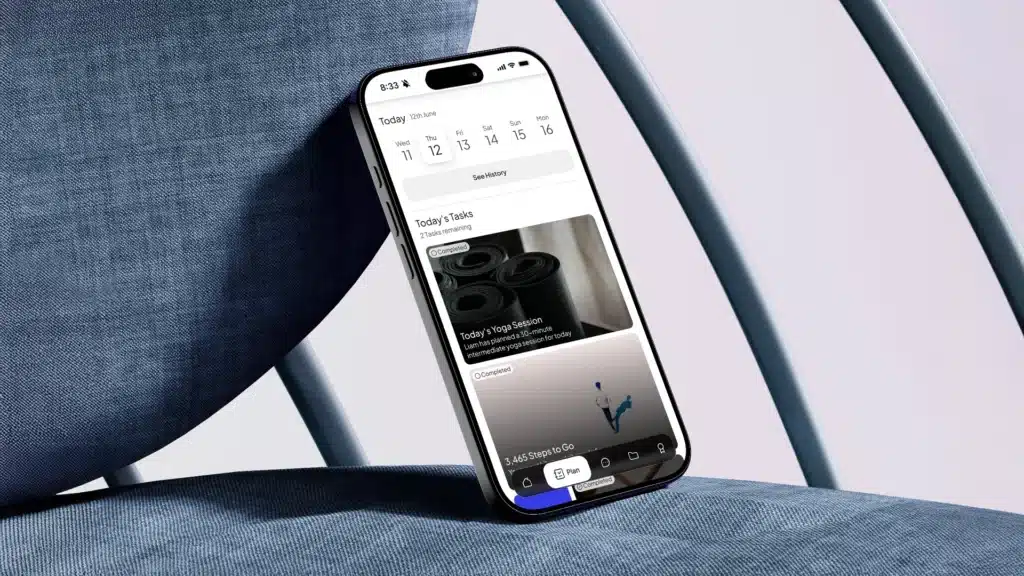
Clovo delivers all three pillars through a single platform, coordinated by our AI coach Amy. Movement, nutrition, mindset and recovery are not separate programmes bolted together. They are integrated into one personalised plan that adapts as the patient progresses toward their surgical date. That integration is not incidental. It is the clinical rationale for Clovo’s existence.
“Treating exercise, nutrition and psychology as separate tracks misses the point. Surgery stresses the whole patient, and preparation has to do the same.”
Clinical Governance Is Built In, Not Bolted On
Trust is the central question any NHS trust, insurer or health system buyer will ask about a digital health platform operating in a clinical context. Who designed the protocols? How are they reviewed? What happens when a patient flags a concern or falls outside expected parameters? These are not bureaucratic questions. They are the right questions, and most digital health platforms cannot answer them satisfactorily.
Clovo was co-founded by Dr Rebecca Hughes MRCS, a surgeon who has worked within the NHS surgical pathway and understands its demands firsthand. Every protocol underpinning Amy’s recommendations has been developed with clinical input and sits within a formal clinical governance framework. This is not a wellness startup that has hired a medical advisor. Clinical oversight is structural at Clovo, embedded from the founding team outward.
This matters particularly for risk stratification. Not every patient is the same, and not every patient is safe to exercise without modification. Clovo’s platform is designed to identify patients who need adjusted programming, flag concerns to clinical teams, and operate within boundaries that reflect the real-world complexity of a surgical patient population. You can read more about how we approach this in our post on Clovo’s clinical safety framework.
Designed to Scale Across Entire Patient Populations
Individual clinicians already know that prehabilitation works. The problem has never been clinical scepticism. It has been delivery. A dedicated prehabilitation service requires physiotherapists, dietitians and psychologists, working in a coordinated way, for every eligible patient. In a health system under sustained pressure, that model does not scale.
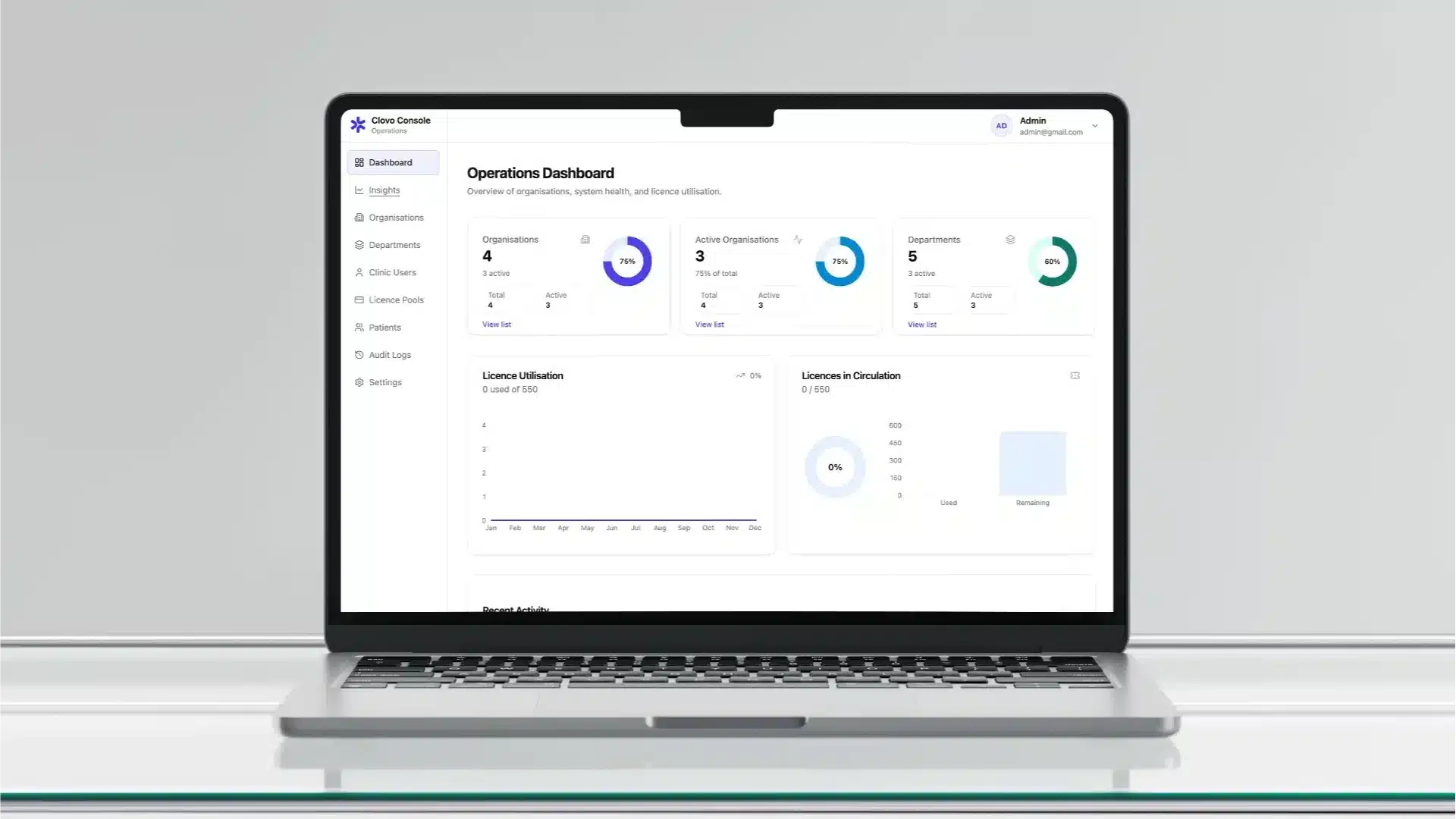
Clovo was designed from the ground up to solve the delivery problem, not just the clinical one. Amy can support hundreds of patients simultaneously, each with a personalised programme, without requiring a clinician to be present for every interaction. This does not replace the clinical team. It extends their reach, allowing them to focus their time on patients who need direct intervention while Amy handles the structured support, check-ins and progress tracking for the broader population.
For NHS trusts and health system buyers evaluating value-based care solutions, this is a meaningful distinction. The question is not whether prehabilitation improves patient outcomes. The evidence on that is clear. The question is whether it can be delivered consistently, safely and cost-effectively across an entire patient population. Clovo’s answer to that question is yes. To understand more about how we approach population-level delivery, see how Clovo scales prehabilitation across entire patient populations.


How Clovo Can Help
Clovo is not a general wellness platform with a surgical skin applied to it. It is a purpose-built prehabilitation and rehabilitation platform, designed specifically for surgical and cancer patients, governed by clinicians and built to operate within real health system infrastructure. For procurement teams, research partners and clinical leads evaluating their options in the digital health space, that specificity is the point.
If you are asking whether a general health app can substitute for what Clovo does, the honest answer is no. The clinical needs of a patient preparing for surgery are distinct, time-sensitive and consequential. They deserve a platform built for exactly that purpose. To understand the evidence underpinning our approach, start with what the research actually says about prehabilitation.
The digital health market will continue to grow, and more platforms will position themselves as solutions for surgical patients. What will separate credible platforms from the rest is clinical specificity, governance, and the ability to deliver at scale without compromising on either. Those are the standards Clovo was built to meet, and they are the standards we believe this space deserves.
| Related Reading |
| How AI is Changing Patient Recovery A look at the evidence and the technology behind AI-driven recovery platforms, and what it means for surgical patients and health systems. |
| The Evidence Behind Prehabilitation: What the Research Actually Says A deep dive into the clinical studies behind prehab, including the key statistics on complication rates, hospital stays and functional recovery outcomes. |
| Introducing Amy: Clovo’s AI Recovery Coach Meet Amy, the AI coach at the heart of Clovo’s platform, and learn how she delivers personalised prehabilitation across movement, nutrition and mindset. |